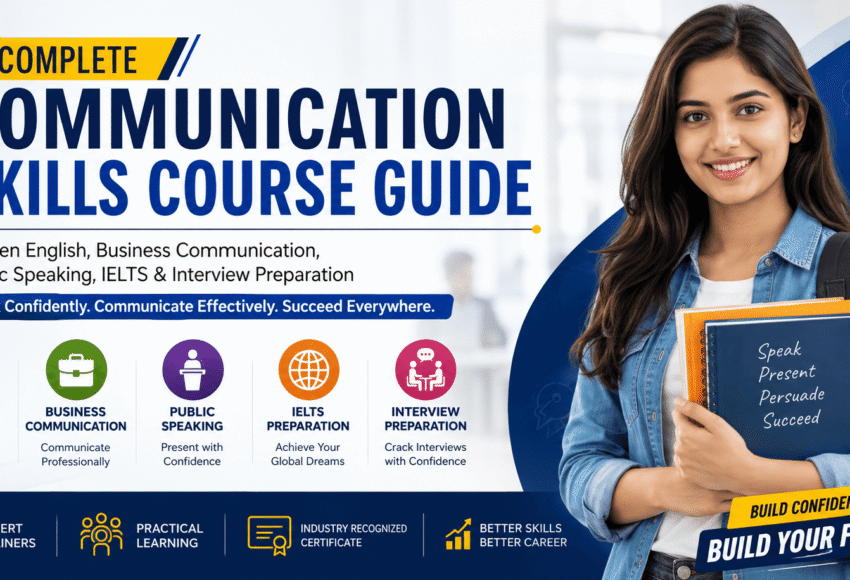
Complete Communication Skills Course Guide: Spoken English, Business Communication, Public Speaking, IELTS & Interview Preparation (2026)
Strong communication skills have become one of the most valuable career assets in today’s competitive world. Whether you are a student preparing for placements, a job seeker attending interviews, a working professional aiming for promotions, or someone planning to study abroad, mastering communication can open countless opportunities.
A complete communication skills course combines Spoken English, Business Communication, Public Speaking, IELTS preparation, and Interview Preparation into one comprehensive learning programme. This guide explains everything you need to know, including course benefits, syllabus, career opportunities, eligibility, duration, and frequently asked questions.
Why Communication Skills Matter More Than Ever in 2026
According to employers across industries, technical knowledge alone is no longer enough. Companies seek professionals who can:
- Speak confidently in English
- Present ideas clearly
- Write professional emails
- Communicate with clients
- Perform well in interviews
- Lead meetings and discussions
- Deliver presentations confidently
- Work effectively in multicultural environments
Whether you are entering IT, healthcare, banking, finance, education, digital marketing, customer service, or business management, communication skills significantly improve employability.
What is a Complete Communication Skills Course?
A Complete Communication Skills Course is a career-focused training programme designed to improve every aspect of professional and personal communication.
Instead of learning only Spoken English, students also develop:
- English speaking fluency
- Grammar fundamentals
- Vocabulary development
- Pronunciation improvement
- Business communication skills
- Email writing
- Presentation skills
- Public speaking confidence
- Interview preparation
- Group discussion techniques
- IELTS exam preparation
- Personality development
- Soft skills
This integrated approach prepares learners for both academic and professional success.
Who Should Join This Course?
This course is suitable for:
- College students
- School graduates
- Freshers
- Job seekers
- Working professionals
- Entrepreneurs
- Business owners
- Government exam aspirants
- IELTS aspirants
- Homemakers returning to work
- Professionals seeking career growth
Course Modules Explained
1. Spoken English
Spoken English is the foundation of effective communication.
Students learn:
- Daily conversation
- Grammar in practical use
- Vocabulary building
- Sentence formation
- Listening skills
- Pronunciation
- Accent clarity
- Fluency improvement
- Confidence building
Key Outcomes
- Speak naturally in English
- Reduce hesitation
- Improve pronunciation
- Build confidence in conversations
2. Business Communication
Business communication prepares learners for professional workplaces.
Topics include:
- Professional email writing
- Office etiquette
- Business vocabulary
- Report writing
- Meeting communication
- Telephone etiquette
- Client communication
- Corporate communication
- Workplace collaboration
Skills Developed
- Professional communication
- Corporate etiquette
- Business writing
- Client interaction
- Team communication
3. Public Speaking
Public speaking is one of the most demanded leadership skills.
Students practise:
- Stage confidence
- Speech delivery
- Voice modulation
- Storytelling
- Presentation techniques
- Audience engagement
- Body language
- Confidence building
Benefits
- Eliminate stage fear
- Deliver powerful presentations
- Become a confident speaker
- Improve leadership skills
4. IELTS Preparation
For students planning to study, work, or migrate abroad, IELTS preparation is essential.
The course covers:
Listening
- Audio comprehension
- Note-taking
- Answer strategies
Reading
- Skimming
- Scanning
- Time management
Writing
- Task 1
- Task 2
- Essay writing
- Grammar accuracy
Speaking
- Interview practice
- Fluency
- Pronunciation
- Confidence
5. Interview Preparation
Interview preparation helps candidates perform confidently during recruitment.
Topics include:
- HR interview questions
- Technical interview communication
- Resume discussion
- Self-introduction
- Body language
- Salary negotiation
- Mock interviews
- Confidence building
Students Learn
- Professional introduction
- Answering difficult questions
- Handling stress
- Interview etiquette
- Communication under pressure
Course Syllabus
A complete communication skills programme generally includes:
Module 1
- English Grammar
- Vocabulary
- Pronunciation
- Sentence Formation
Module 2
- Spoken English
- Daily Conversation
- Listening Practice
Module 3
- Business Communication
- Email Writing
- Corporate Etiquette
Module 4
- Public Speaking
- Presentation Skills
- Leadership Communication
Module 5
- Group Discussion
- Personality Development
- Confidence Building
Module 6
- Interview Preparation
- Resume Communication
- Mock Interviews
Module 7
- IELTS Preparation
- Reading
- Writing
- Listening
- Speaking
Benefits of Joining a Communication Skills Course
Students gain:
- Better English fluency
- Improved confidence
- Professional communication
- Strong presentation skills
- Better interview performance
- Leadership abilities
- Global career opportunities
- Higher employability
- Better academic performance
- Improved workplace communication
Career Opportunities After Completing the Course
Communication skills are valuable across industries.
Popular career paths include:
- Customer Support Executive
- HR Executive
- Digital Marketing Professional
- Sales Executive
- Business Development Executive
- Receptionist
- Corporate Trainer
- IELTS Trainer
- Public Relations Executive
- Client Relationship Executive
- Banking Professional
- Hospitality Executive
- International Process Associate
- Content Executive
- Administrative Professional
Course Duration
The duration varies depending on the training institute.
Typical options include:
| Course Type | Duration |
|---|---|
| Fast Track | 1 Month |
| Standard Course | 2–3 Months |
| Advanced Programme | 4–6 Months |
Many institutes also offer:
- Weekend batches
- Online classes
- Offline classroom training
- Hybrid learning
- Flexible timings
Skills You Will Develop
After completing the course, learners typically improve in:
- Spoken English
- Grammar
- Business communication
- Presentation skills
- Public speaking
- Leadership
- Team communication
- Interview confidence
- IELTS readiness
- Professional etiquette
- Personality development
- Critical thinking
How to Choose the Best Communication Skills Course
Before enrolling, consider whether the institute offers:
- Experienced trainers
- Practical speaking sessions
- Mock interviews
- Public speaking practice
- IELTS guidance
- Small batch sizes
- Industry-relevant curriculum
- Flexible schedules
- Certification
- Placement or career support
Why Employers Value Strong Communication Skills
Recruiters consistently rank communication among the top employability skills because it helps employees:
- Collaborate effectively
- Build client relationships
- Resolve workplace challenges
- Deliver impactful presentations
- Represent organisations professionally
- Adapt to global work environments
Professionals with excellent communication skills often stand out for leadership roles and career advancement.
Frequently Asked Questions (FAQs)
1. What is included in a communication skills course?
A comprehensive course typically covers Spoken English, Business Communication, Public Speaking, IELTS preparation, Interview Preparation, personality development, grammar, vocabulary, presentation skills, and professional etiquette.
2. Is this course suitable for beginners?
Yes. Most communication skills courses start with the fundamentals and gradually progress to advanced communication techniques.
3. Can working professionals join?
Absolutely. Many institutes provide evening, weekend, and flexible batches designed for working professionals.
4. Does this course help with job interviews?
Yes. Learners practise self-introductions, mock interviews, HR interview questions, body language, and communication techniques to improve interview performance.
5. Is IELTS preparation included?
Many comprehensive communication programmes include IELTS Listening, Reading, Writing, and Speaking modules to help students prepare for international education or employment.
6. How long does it take to become fluent in English?
Fluency depends on your starting level and consistent practice. Most learners notice significant improvement within two to six months of structured training combined with regular speaking practice.
7. Will I receive a certificate after completing the course?
Most recognised institutes provide a course completion certificate. Check with the training provider regarding certification details and any government or industry recognition.
8. Can communication skills improve my salary?
Strong communication skills can enhance employability, improve interview outcomes, and support career progression, which may contribute to better salary opportunities over time.
Conclusion
Communication is no longer just a soft skill—it is a career accelerator. A comprehensive Communication Skills Course that combines Spoken English, Business Communication, Public Speaking, IELTS preparation, and Interview Preparation equips learners with the confidence and practical abilities needed to succeed in education, employment, and global workplaces.
Whether your goal is securing your first job, earning a promotion, studying abroad, or becoming a confident communicator, investing in structured communication training can deliver long-term personal and professional benefits.
Leave a Comment