Business Communication vs Spoken English: Which Course Should You Choose for Career Success in 2026?
One of the most common questions students, fresh graduates, and working professionals ask is:
“Should I join a Spoken English course or a Business Communication course?”
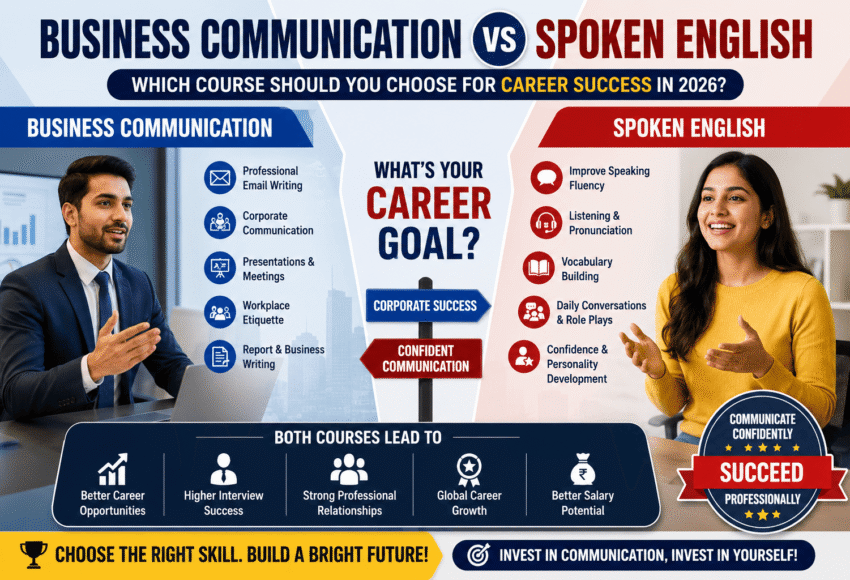
Both courses improve communication skills, but they serve different purposes. Spoken English focuses on building fluency and confidence in everyday English conversations, while Business Communication prepares learners for professional workplaces through corporate communication, presentations, emails, meetings, and client interactions.
In this complete 2026 guide, you’ll learn the key differences, benefits, career opportunities, syllabus, and how to decide which course best fits your career goals.
Why Communication Skills Are Essential in 2026
Today’s employers value communication just as much as technical expertise. Whether you’re applying for your first job, attending interviews, leading meetings, or working with international clients, effective communication is a key factor in career success.
Strong communication skills help you:
- Speak confidently
- Build professional relationships
- Improve interview performance
- Write professional emails
- Present ideas effectively
- Work in multinational companies
- Increase leadership potential
- Enhance career growth
What is a Spoken English Course?
A Spoken English Course is designed to help learners communicate fluently and confidently in everyday English.
The primary focus is on:
- Speaking fluently
- Improving grammar
- Building vocabulary
- Correct pronunciation
- Listening skills
- Daily conversations
- Confidence building
- Personality development
It is ideal for learners who struggle to communicate in English or wish to improve their fluency.
What is a Business Communication Course?
A Business Communication Course focuses on professional communication in workplace environments.
Students learn:
- Professional email writing
- Corporate etiquette
- Business presentations
- Office communication
- Client interaction
- Meeting etiquette
- Business vocabulary
- Team communication
- Report writing
- Professional writing skills
It prepares learners for corporate jobs and leadership roles.
Business Communication vs Spoken English: Key Differences
| Feature | Spoken English | Business Communication |
|---|---|---|
| Primary Goal | Improve spoken fluency | Improve workplace communication |
| Audience | Beginners and intermediate learners | Students, professionals, managers |
| Grammar Focus | High | Moderate |
| Daily Conversations | ✔ Yes | Limited |
| Corporate Communication | Basic | Advanced |
| Email Writing | Basic | Professional |
| Public Speaking | Included | Included |
| Presentation Skills | Basic | Advanced |
| Interview Preparation | Included | Included |
| Workplace Communication | Basic | Comprehensive |
| Leadership Skills | Limited | Strong focus |
| Client Communication | Basic | Advanced |
Spoken English Course Syllabus
Most Spoken English courses include:
Grammar
- Tenses
- Articles
- Prepositions
- Sentence structure
Vocabulary
- Daily-use words
- Idioms
- Phrases
- Professional vocabulary
Speaking Practice
- Conversations
- Group discussions
- Role plays
- Fluency exercises
Pronunciation
- Accent clarity
- Word stress
- Intonation
- Listening exercises
Business Communication Course Syllabus
Business Communication programmes usually cover:
Corporate Communication
- Professional communication
- Workplace etiquette
- Business language
Business Writing
- Email writing
- Reports
- Business letters
- Official documentation
Presentation Skills
- Public speaking
- PowerPoint presentations
- Audience engagement
- Voice modulation
Workplace Communication
- Team collaboration
- Meetings
- Client communication
- Negotiation basics
Who Should Choose a Spoken English Course?
A Spoken English course is ideal for:
- School students
- College students
- Beginners
- Job seekers
- Homemakers
- IELTS aspirants
- Fresh graduates
- Anyone lacking confidence in English speaking
Who Should Choose a Business Communication Course?
Business Communication is suitable for:
- Working professionals
- MBA students
- Corporate employees
- Team leaders
- Managers
- Entrepreneurs
- Sales professionals
- HR executives
- Customer relationship executives
- Business owners
Benefits of a Spoken English Course
Students typically gain:
- Better English fluency
- Improved pronunciation
- Stronger vocabulary
- Confidence in conversations
- Reduced hesitation
- Better interview preparation
- Improved public speaking
Benefits of a Business Communication Course
Professionals develop:
- Professional email writing
- Presentation skills
- Leadership communication
- Client interaction
- Meeting management
- Corporate etiquette
- Workplace confidence
- Business writing skills
Which Course Offers Better Career Growth?
The answer depends on your current level and career goals.
Choose Spoken English If You:
- Are uncomfortable speaking English
- Want to improve fluency
- Need better grammar
- Are preparing for interviews
- Want confidence in daily conversations
Choose Business Communication If You:
- Already speak English reasonably well
- Want corporate communication skills
- Work in an office environment
- Lead teams or presentations
- Want promotion opportunities
Can You Learn Both?
Yes—and for many learners, this is the most effective approach.
A combined programme often starts with Spoken English to build fluency, then progresses to Business Communication for workplace readiness.
This pathway helps you:
- Speak confidently
- Communicate professionally
- Write effective emails
- Deliver presentations
- Perform better in interviews
- Work confidently with clients and colleagues
Career Opportunities
Both courses support careers in:
- Banking
- IT
- Digital Marketing
- Healthcare
- Hospitality
- Education
- BPO/KPO
- Retail
- Sales
- Human Resources
- Customer Service
- Business Development
Course Duration
Typical course durations include:
| Programme | Duration |
|---|---|
| Spoken English | 1–3 Months |
| Business Communication | 2–4 Months |
| Combined Programme | 3–6 Months |
Many institutes provide:
- Online classes
- Offline classroom training
- Weekend batches
- Fast-track programmes
- Hybrid learning
How to Choose the Right Institute
Before enrolling, consider whether the institute offers:
- Experienced trainers
- Practical communication sessions
- Small batch sizes
- Mock interviews
- Public speaking practice
- Business communication modules
- Flexible schedules
- Recognised certification
- Career guidance
- Placement assistance (where available)
Why Employers Value Both Skills
Modern organisations prefer professionals who can:
- Communicate clearly with colleagues and clients
- Write professional emails
- Participate confidently in meetings
- Deliver presentations
- Solve problems collaboratively
- Represent the organisation professionally
Employees with strong communication skills are often better positioned for promotions and leadership opportunities.
Frequently Asked Questions (FAQs)
1. What is the difference between Spoken English and Business Communication?
Spoken English focuses on everyday fluency, grammar, pronunciation, and confidence, while Business Communication emphasises workplace communication, professional writing, presentations, meetings, and corporate etiquette.
2. Which course is better for freshers?
Freshers with limited English confidence should begin with Spoken English. Those who already communicate comfortably in English can benefit from Business Communication or a combined programme.
3. Can I take both courses?
Yes. Many institutes offer integrated programmes covering Spoken English followed by Business Communication for complete career preparation.
4. Which course helps with interviews?
Both courses contribute to interview success. Spoken English improves fluency and confidence, while Business Communication enhances professional responses, etiquette, and presentation.
5. Is Business Communication only for corporate employees?
No. It is useful for students, entrepreneurs, professionals, and anyone who wants to communicate more effectively in professional settings.
6. Will I receive a certificate?
Most recognised institutes provide a course completion certificate. Check with the institute regarding certification and course assessment.
7. Can these courses improve career opportunities?
Yes. Strong communication skills can improve employability, workplace performance, leadership potential, and professional confidence.
8. Are online classes available?
Many institutes now offer online, offline, and hybrid learning formats to accommodate different schedules.
Conclusion
Both Spoken English and Business Communication are valuable investments in your career. The right choice depends on your current communication level and future goals.
If your priority is building fluency, confidence, and everyday communication, a Spoken English Course is the ideal starting point.
If you’re preparing for a corporate career, aiming for promotions, or looking to strengthen workplace communication, a Business Communication Course is the better choice.
For the best long-term results in 2026, consider a programme that combines Spoken English, Business Communication, Public Speaking, Interview Preparation, and Personality Development. This comprehensive approach equips you with the communication skills employers value across industries.