5 Communication Skills Every Student Needs Before Campus Placements and Job Interviews (2026 Guide)
Campus placements are one of the biggest milestones in a student’s academic journey. While technical knowledge and academic performance are important, recruiters often select candidates based on how effectively they communicate their ideas, solve problems, and present themselves during interviews.
In 2026, employers are looking for graduates who can communicate confidently, collaborate with teams, and adapt to professional work environments. Whether you’re preparing for your first campus interview or applying for internships, developing strong communication skills can significantly improve your chances of getting hired.
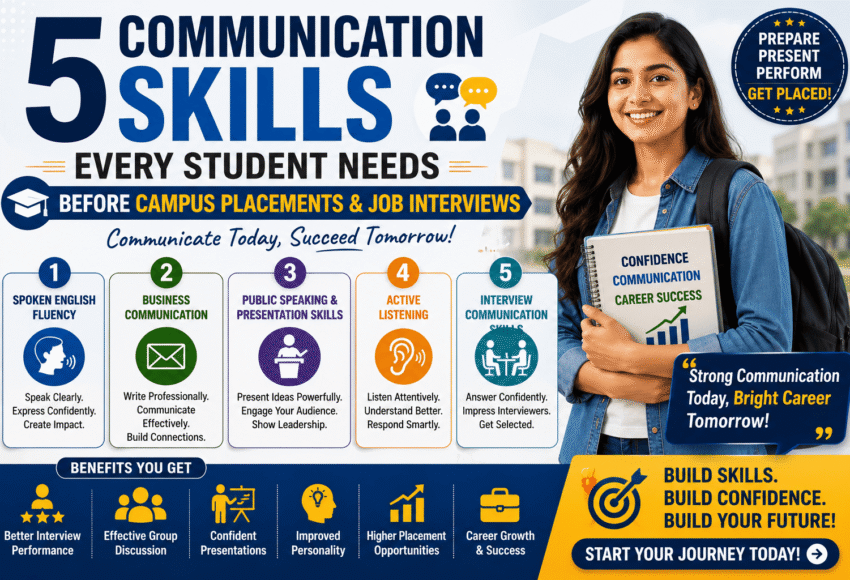
This complete guide explores the five essential communication skills every student should master before campus placements and job interviews, along with practical tips to improve them.
Why Communication Skills Matter in Campus Placements
Recruiters assess much more than your resume. Throughout the hiring process, they observe:
- How confidently you introduce yourself
- Your ability to answer interview questions
- Your participation in group discussions
- Your presentation skills
- Your listening ability
- Your teamwork and leadership potential
- Your professional attitude
Students with strong communication skills often make a positive first impression and perform better during interviews.
Skill 1: Spoken English Fluency
Why It Matters
For many campus interviews, English is the primary language of communication. Speaking confidently allows you to express your thoughts clearly and professionally.
Improve By:
- Practising daily conversations
- Reading English newspapers and books
- Learning new vocabulary
- Watching English news or educational videos
- Speaking English with friends and mentors
Benefits
- Better interview performance
- Increased confidence
- Clear communication
- Reduced hesitation
- Improved networking
Skill 2: Business Communication
Why It Matters
Professional communication differs from casual conversations. Employers expect graduates to communicate appropriately in workplace settings.
Learn Skills Such As:
- Professional email writing
- Meeting etiquette
- Workplace communication
- Corporate vocabulary
- Telephone etiquette
- Client communication
- Team collaboration
Benefits
- Workplace readiness
- Professional behaviour
- Better corporate communication
- Stronger teamwork
- Improved career growth
Skill 3: Public Speaking & Presentation Skills
Why It Matters
Many recruitment processes include presentations, seminars, or group activities where confident speaking is essential.
Practise:
- Stage speaking
- Presentation delivery
- Voice modulation
- Storytelling
- Audience engagement
- Body language
- Eye contact
Benefits
- Better presentations
- Strong leadership skills
- Improved confidence
- Greater audience engagement
- Enhanced professional image
Skill 4: Active Listening
Why It Matters
Communication is not only about speaking. Active listening helps you understand questions correctly and respond thoughtfully.
Ways to Improve
- Listen without interrupting
- Maintain eye contact
- Take notes during discussions
- Ask relevant follow-up questions
- Summarise key points before responding
Benefits
- Better interview responses
- Strong teamwork
- Improved problem-solving
- Effective communication
- Better workplace relationships
Skill 5: Interview Communication Skills
Why It Matters
Your knowledge matters only if you can communicate it effectively during interviews.
Focus On:
- Self-introduction
- HR interview questions
- Behavioural interview responses
- Group discussions
- Mock interviews
- Professional body language
- Confidence building
Benefits
- Higher interview confidence
- Better first impressions
- Improved answer structure
- Reduced interview anxiety
- Increased selection chances
Common Communication Mistakes Students Make
Avoid these common errors during placements:
- Speaking too fast
- Using filler words excessively
- Avoiding eye contact
- Giving very short or very long answers
- Interrupting interviewers
- Using informal language
- Poor body posture
- Lack of preparation
Recognising these habits early can help you present yourself more professionally.
How to Improve Communication Skills Before Placements
Here are practical strategies that can make a noticeable difference:
Practise Speaking Every Day
Even 15–20 minutes of daily English conversation can improve fluency over time.
Join a Communication Skills Course
A structured programme can provide expert guidance, speaking practice, presentations, and mock interviews.
Participate in Group Discussions
Take part in college clubs, seminars, debates, or discussion groups to improve confidence and teamwork.
Record Yourself
Record practice interviews or presentations to identify areas for improvement in pronunciation, pace, and body language.
Read and Expand Your Vocabulary
Reading newspapers, articles, books, and professional blogs improves vocabulary and communication naturally.
Essential Skills Recruiters Look For
Employers consistently value graduates who can:
- Communicate confidently
- Think critically
- Solve problems
- Work in teams
- Present ideas clearly
- Adapt quickly
- Demonstrate professionalism
- Show leadership potential
Communication skills strengthen all of these qualities.
Benefits of Communication Skills for Students
Students who invest in communication training often experience:
- Better campus placement performance
- Increased interview confidence
- Stronger presentation skills
- Improved academic participation
- Better internship opportunities
- Enhanced networking
- Higher workplace readiness
- Long-term career growth
Who Should Develop These Skills?
These communication skills are valuable for:
- College students
- Final-year students
- Engineering students
- Commerce students
- Management students
- Fresh graduates
- Internship applicants
- Competitive exam candidates
- Job seekers
How Communication Skills Support Career Growth
Communication skills remain valuable throughout your career—not just during placements.
They help professionals:
- Build stronger client relationships
- Lead teams effectively
- Deliver successful presentations
- Negotiate confidently
- Manage workplace conflicts
- Earn promotions
- Grow into leadership roles
Frequently Asked Questions (FAQs)
1. Why are communication skills important for campus placements?
Communication skills help students express ideas clearly, answer interview questions confidently, participate effectively in group discussions, and make a positive impression on recruiters.
2. Which communication skill is most important for job interviews?
There is no single most important skill. Spoken English, active listening, confidence, professional communication, and structured interview responses all contribute to interview success.
3. Can communication skills be improved in a few months?
Yes. With consistent practice and structured training, many students notice significant improvement within two to three months.
4. Is public speaking necessary for placements?
Public speaking helps students present ideas confidently during presentations, seminars, and interviews, making it a valuable career skill.
5. Does communication training help freshers?
Yes. Communication training helps freshers improve confidence, workplace readiness, interview performance, and professional behaviour.
6. Should I take a communication skills course before placements?
A well-structured communication skills course can provide practical speaking sessions, mock interviews, presentation practice, and professional feedback, helping you prepare more effectively.
7. What is active listening?
Active listening means fully focusing on the speaker, understanding the message, and responding thoughtfully instead of simply waiting for your turn to speak.
8. Can communication skills improve career opportunities?
Strong communication skills can improve interview performance, workplace collaboration, leadership potential, and long-term career development.
Conclusion
Technical knowledge may help you qualify for an interview, but communication skills often determine whether you receive the job offer. From speaking confidently and participating in group discussions to presenting ideas effectively and responding professionally during interviews, communication plays a vital role in every stage of your career.
If you’re preparing for campus placements or job interviews in 2026, invest time in developing these five essential communication skills. Consider joining a structured programme that combines Spoken English, Business Communication, Public Speaking, Interview Preparation, and Personality Development. With regular practice and expert guidance, you’ll be better prepared to stand out from the competition and begin your professional journey with confidence.