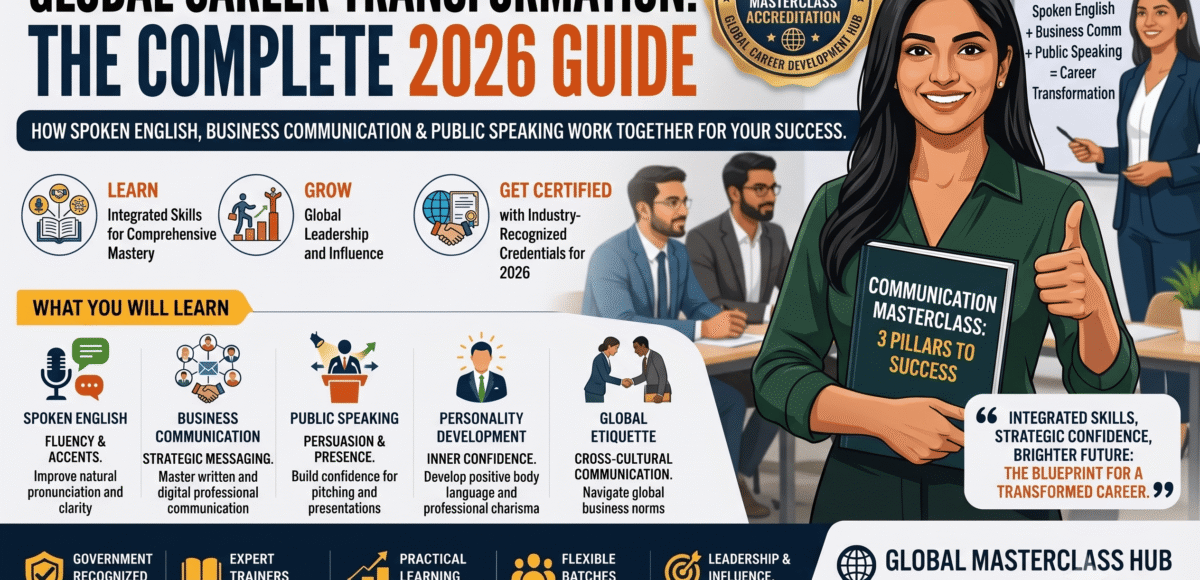
How Spoken English, Business Communication & Public Speaking Together Can Transform Your Career (2026 Guide)
Technical knowledge may help you qualify for a job, but communication skills often determine how far you grow in your career. In today’s competitive workplace, employers value professionals who can communicate clearly, present ideas confidently, collaborate effectively, and lead teams.
Three essential skills play a major role in professional success:
- Spoken English
- Business Communication
- Public Speaking
Although each skill has unique benefits, learning them together creates a strong foundation for academic success, employability, leadership, and long-term career growth.
This guide explains how these three communication skills complement each other, why they are important in 2026, and how they can help students, job seekers, entrepreneurs, and working professionals succeed.
Why Communication Skills Matter More Than Ever
Modern organisations seek professionals who can communicate confidently with colleagues, customers, managers, and clients. Effective communication improves productivity, teamwork, and decision-making.
Strong communication skills help you:
- Express ideas clearly
- Build confidence
- Develop leadership qualities
- Improve workplace relationships
- Handle interviews successfully
- Deliver effective presentations
- Increase employability
- Strengthen professional networking
- Enhance customer communication
- Grow faster in your career
In many industries, communication skills are considered as important as technical expertise.
What Is Spoken English?
Spoken English focuses on improving everyday verbal communication through practical learning.
Typical topics include:
- Grammar fundamentals
- Vocabulary development
- Sentence formation
- Pronunciation
- Listening skills
- Daily conversations
- Fluency building
- Confidence development
A Spoken English course helps learners communicate naturally in academic, social, and professional situations.
What Is Business Communication?
Business Communication teaches learners how to communicate professionally in the workplace.
It typically covers:
- Professional email writing
- Office communication
- Client interactions
- Workplace etiquette
- Business presentations
- Team collaboration
- Meeting communication
- Telephone and virtual communication
Business communication ensures that your ideas are understood clearly in professional environments.
What Is Public Speaking?
Public Speaking develops the ability to confidently present ideas before an audience.
Training usually includes:
- Stage confidence
- Speech preparation
- Voice modulation
- Storytelling
- Audience engagement
- Presentation delivery
- Body language
- Handling questions confidently
Public speaking helps individuals become more persuasive, confident, and influential.
How These Three Skills Work Together
Although these courses are different, they complement one another.
| Skill | What You Learn | Career Benefit |
|---|---|---|
| Spoken English | Fluency, vocabulary, grammar, pronunciation | Confident daily communication |
| Business Communication | Professional communication, workplace etiquette, emails | Corporate success |
| Public Speaking | Presentation, leadership, stage confidence | Leadership and career growth |
Together, these skills create a complete communication profile that employers highly value.
Benefits for Students
Students who develop communication skills early gain several advantages.
They become more confident in:
- Classroom discussions
- Seminar presentations
- Group projects
- College interviews
- Competitive examinations
- Campus placements
- Internship interviews
Strong communication skills also improve academic participation and self-confidence.
Benefits for Job Seekers
Recruiters often evaluate communication skills during every stage of hiring.
Learning these three skills helps candidates:
- Introduce themselves confidently
- Answer HR interview questions effectively
- Perform well in group discussions
- Build professional resumes
- Create strong first impressions
- Improve interview confidence
Communication training increases employability across industries.
Benefits for Working Professionals
Employees who communicate effectively often receive greater responsibilities and leadership opportunities.
These skills help professionals:
- Lead meetings
- Deliver presentations
- Communicate with clients
- Collaborate with teams
- Resolve workplace conflicts
- Negotiate professionally
- Manage projects effectively
Strong communication often contributes to faster career progression.
Benefits for Entrepreneurs
Business owners need excellent communication to grow their organisations.
Public speaking and business communication help entrepreneurs:
- Pitch ideas confidently
- Build customer relationships
- Present products and services
- Negotiate with clients
- Lead teams
- Represent their business professionally
Communication skills directly influence business growth and customer trust.
Course Syllabus (2026)
A comprehensive communication programme generally includes:
Spoken English
- Grammar
- Vocabulary
- Pronunciation
- Daily conversations
- Fluency practice
Business Communication
- Professional emails
- Workplace communication
- Business etiquette
- Presentation skills
- Team collaboration
Public Speaking
- Speech writing
- Stage confidence
- Voice modulation
- Audience engagement
- Storytelling
- Body language
Personality Development
- Confidence building
- Leadership
- Positive attitude
- Professional grooming
- Time management
Interview Preparation
- Self-introduction
- Mock interviews
- HR interview practice
- Group discussions
- Resume communication
Course Duration
Training institutes generally provide:
- Weekday batches
- Weekend batches
- Fast-track programmes
- Student batches
- Working professional batches
The duration depends on the programme structure and learning objectives.
Government Certification
Many institutes provide government-recognised communication or skill development certifications where applicable.
A recognised certificate can:
- Strengthen your resume
- Demonstrate professional training
- Improve internship applications
- Enhance career credibility
However, practical communication skills remain the most valuable outcome of the programme.
Industries That Value Communication Skills
Professionals with excellent communication skills are in demand across sectors such as:
- Information Technology
- Banking & Finance
- Healthcare
- Digital Marketing
- Human Resources
- Hospitality
- Aviation
- Sales & Marketing
- Customer Service
- Education
- Retail
- Corporate Administration
- Business Development
Communication is a transferable skill that benefits almost every profession.
Why Ahmedabad Is an Ideal Place to Learn Communication Skills
Ahmedabad is a major education and business destination in Gujarat. Students and professionals from areas such as Law Garden, Navrangpura, Paldi, Ellisbridge, Satellite, Vastrapur, SG Highway, Chandkheda, Gota, Maninagar, Bopal, South Bopal, Nikol, Naroda, and surrounding locations have access to institutes offering practical communication training.
Courses that combine Spoken English, Business Communication, and Public Speaking provide learners with a comprehensive skill set that supports academic success and career growth.
How to Choose the Best Communication Skills Institute
Before enrolling, evaluate:
- Updated curriculum
- Experienced trainers
- Practical speaking sessions
- Business communication training
- Public speaking practice
- Personality development modules
- Mock interviews
- Interactive classroom environment
- Flexible batch timings
- Government-recognised certification (where applicable)
- Positive student reviews
A balanced programme should focus on practical application rather than theory alone.
Frequently Asked Questions (FAQs)
1. Why should I learn Spoken English, Business Communication, and Public Speaking together?
These three skills complement each other. Together they improve everyday communication, workplace professionalism, presentation abilities, confidence, and leadership potential.
2. Who should join this course?
Students, fresh graduates, job seekers, working professionals, entrepreneurs, teachers, and anyone looking to improve communication and confidence.
3. Does this course help with job interviews?
Yes. Most programmes include interview preparation, self-introduction practice, communication training, group discussions, and personality development.
4. Is Business Communication different from Spoken English?
Yes. Spoken English focuses on everyday fluency and language skills, while Business Communication teaches professional communication used in workplaces.
5. How does Public Speaking improve career growth?
Public speaking builds confidence, leadership, presentation skills, persuasion, and the ability to communicate effectively with larger audiences.
6. Is government-recognised certification useful?
A recognised certificate adds value to your profile, but practical communication skills and consistent practice have the greatest impact on career success.
7. Can beginners join?
Yes. Most institutes offer beginner-friendly batches that gradually develop English fluency, workplace communication, and presentation skills.
8. Which industries value communication skills the most?
Nearly every industry—including IT, finance, healthcare, education, hospitality, digital marketing, aviation, sales, and customer service—values strong communication skills.
Conclusion
Success in 2026 requires more than technical expertise. Employers seek individuals who communicate effectively, present ideas confidently, collaborate with teams, and demonstrate leadership potential.
Learning Spoken English, Business Communication, and Public Speaking together creates a powerful combination of language fluency, workplace professionalism, and presentation confidence. These skills enhance academic performance, improve interview success, strengthen workplace communication, and open doors to leadership opportunities across industries.
If you are looking to build long-term career success, choose a communication skills programme that offers practical speaking sessions, business communication training, public speaking practice, personality development, interview preparation, and recognised certification where applicable. Investing in these skills today can deliver lifelong personal and professional benefits.
Leave a Comment