
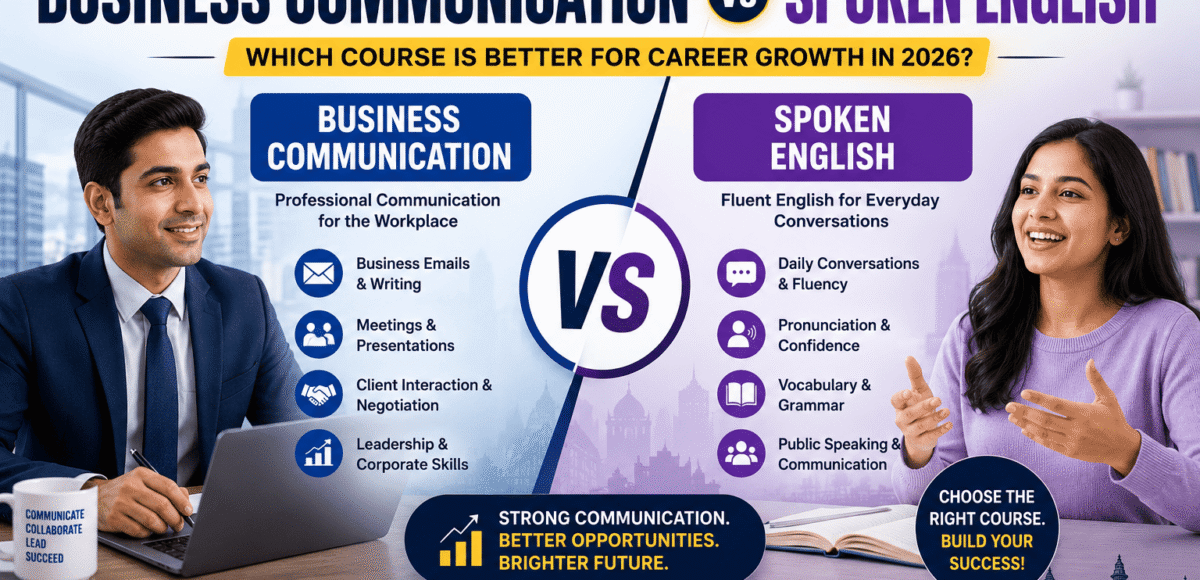
Business Communication vs Spoken English: Which Course Is Better for Career Growth in 2026?
Communication has become one of the most sought-after skills in today’s competitive job market. Whether you are a student preparing for your first job, a professional looking for career advancement, or an entrepreneur building business relationships, effective communication can create new opportunities.
Many learners often ask: Should I choose a Spoken English course or a Business Communication course?
While both courses focus on improving communication, they serve different purposes. Spoken English helps you speak confidently in everyday situations, whereas Business Communication prepares you for professional workplace interactions.
In this guide, we’ll compare both courses, explain their benefits, syllabus, career opportunities, and help you decide which one is the right choice for your goals in 2026.
Understanding Spoken English
A Spoken English course focuses on improving your ability to communicate confidently in English. It is ideal for learners who want to overcome hesitation, improve pronunciation, expand vocabulary, and become fluent in conversations.
What You’ll Learn
- English grammar fundamentals
- Vocabulary development
- Daily conversation practice
- Pronunciation improvement
- Fluency building
- Listening skills
- Reading and speaking practice
- Confidence in communication
Best For
- Students after Class 10 or 12
- College students
- Beginners
- Homemakers
- Fresh graduates
- Individuals preparing for interviews
- Anyone who wants to improve English fluency
Understanding Business Communication
Business Communication goes beyond speaking English. It teaches learners how to communicate professionally in corporate environments.
The course focuses on workplace communication, professional etiquette, presentations, email writing, meetings, negotiations, leadership communication, and interpersonal skills.
What You’ll Learn
- Professional communication
- Business email writing
- Workplace etiquette
- Corporate presentations
- Meeting communication
- Team collaboration
- Client interaction
- Leadership communication
- Professional writing
- Corporate vocabulary
Best For
- Working professionals
- MBA students
- Management students
- Entrepreneurs
- Corporate employees
- Sales professionals
- HR professionals
- Business owners
Business Communication vs Spoken English: Key Differences
| Feature | Spoken English | Business Communication |
|---|---|---|
| Primary Focus | Everyday English fluency | Professional workplace communication |
| Communication Style | Informal and daily conversations | Formal business communication |
| Grammar | Strong emphasis | Applied professionally |
| Vocabulary | Daily-use English | Corporate and business vocabulary |
| Email Writing | Basic | Professional |
| Presentation Skills | Limited | Advanced |
| Public Speaking | Basic confidence | Business presentations and meetings |
| Interview Preparation | Included | Advanced corporate interview skills |
| Suitable For | Students and beginners | Professionals and managers |
| Career Objective | Improve fluency | Workplace success and career growth |
Which Course Is Better for Career Growth in 2026?
The answer depends on your current skill level and career goals.
Choose a Spoken English Course If You:
- Want to become fluent in English
- Feel nervous while speaking
- Are a beginner
- Need better pronunciation
- Want to improve everyday communication
- Are preparing for college or entry-level interviews
Choose a Business Communication Course If You:
- Already speak basic English
- Work in an office or corporate environment
- Need presentation skills
- Attend meetings regularly
- Communicate with clients
- Want leadership and managerial communication skills
Can You Learn Both?
Yes. In fact, combining Spoken English and Business Communication provides the best learning experience.
A learner first develops confidence through Spoken English and then builds professional communication skills through Business Communication.
This combination helps learners become job-ready and workplace-ready.
Business Communication Course Syllabus
A modern Business Communication programme generally includes:
Module 1: Professional English
- Workplace vocabulary
- Grammar review
- Formal language
Module 2: Corporate Communication
- Office conversations
- Professional etiquette
- Business vocabulary
Module 3: Email Writing
- Professional emails
- Email etiquette
- Business correspondence
Module 4: Presentation Skills
- Presentation planning
- Public speaking
- Audience engagement
Module 5: Meeting Skills
- Meeting communication
- Team collaboration
- Business discussions
Module 6: Leadership Communication
- Decision-making communication
- Conflict resolution
- Negotiation skills
Module 7: Interview Preparation
- HR interviews
- Self-introduction
- Mock interviews
- Resume communication
Spoken English Course Syllabus
A Spoken English programme usually includes:
- Grammar
- Vocabulary
- Pronunciation
- Listening practice
- Daily conversations
- Reading skills
- Fluency development
- Confidence building
- Public speaking basics
- Group discussions
Benefits of Business Communication
- Professional workplace confidence
- Better presentations
- Improved leadership skills
- Strong client communication
- Better teamwork
- Higher promotion opportunities
- Improved networking
- Enhanced professional image
Benefits of Spoken English
- Better English fluency
- Improved pronunciation
- Increased confidence
- Strong grammar foundation
- Better interview performance
- Improved communication in daily life
- Higher academic confidence
Career Opportunities
Strong communication skills are valuable across industries.
After completing either course, learners can pursue careers in:
- Information Technology
- Digital Marketing
- Banking & Finance
- Hospitality
- Aviation
- Human Resources
- Customer Service
- Sales & Marketing
- Corporate Administration
- Education & Training
- Retail
- Entrepreneurship
Why Communication Skills Matter More Than Ever in 2026
Employers today value candidates who can:
- Speak confidently
- Write professionally
- Present ideas clearly
- Work in teams
- Communicate with clients
- Handle interviews successfully
- Represent organisations professionally
Communication skills are among the most in-demand employability skills across industries.
How to Choose the Right Course
When selecting a communication course, consider:
- Your current English level
- Career objectives
- Course syllabus
- Practical speaking sessions
- Business communication modules
- Interview preparation
- Public speaking training
- Government-recognised certification (where applicable)
- Experienced trainers
- Interactive classroom activities
Frequently Asked Questions (FAQs)
1. What is the difference between Spoken English and Business Communication?
Spoken English focuses on improving everyday English fluency, while Business Communication teaches professional workplace communication, including presentations, meetings, business writing, and corporate etiquette.
2. Which course is better for freshers?
Freshers who are not confident in English should start with Spoken English. Those with good English skills can benefit from Business Communication to prepare for corporate roles.
3. Is Business Communication useful for interviews?
Yes. It improves professional speaking, presentation skills, email etiquette, self-introduction, and interview performance.
4. Can college students join a Business Communication course?
Yes. It is highly beneficial for college students preparing for internships, campus placements, and future careers.
5. Should I learn Spoken English before Business Communication?
If you are a beginner, learning Spoken English first provides a strong foundation before moving on to Business Communication.
6. Are these courses suitable for working professionals?
Absolutely. Working professionals can improve workplace communication, leadership, presentations, and client interactions through these programmes.
7. Is government certification important?
A government-recognised certificate can strengthen your professional profile and demonstrate formal communication training.
8. Can learning both courses improve career opportunities?
Yes. Combining Spoken English with Business Communication helps learners build fluency, confidence, and professional communication skills, making them more competitive in today’s job market.
Conclusion
Choosing between Business Communication and Spoken English depends on your current communication skills and career aspirations. Spoken English builds fluency, confidence, and everyday communication, while Business Communication prepares you for the professional world with workplace etiquette, presentations, corporate writing, and leadership communication.
For many learners, the best approach is to begin with Spoken English and then progress to Business Communication. Together, these skills create a strong foundation for academic success, interview performance, workplace confidence, and long-term career growth.
If you’re looking for a communication course in Ahmedabad in 2026, choose an institute that offers practical training, experienced faculty, an industry-relevant curriculum, interactive learning, and government-recognised certification to help you succeed in today’s competitive employment market.
Leave a Comment