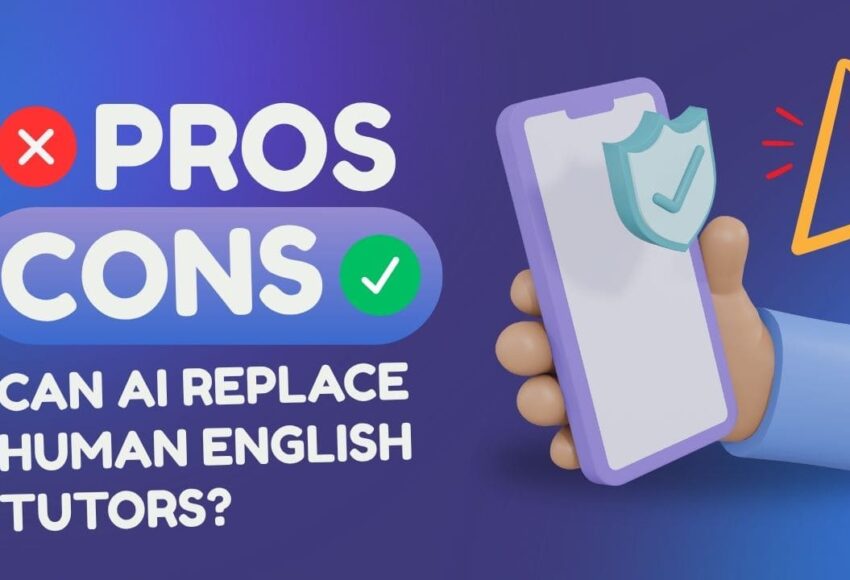
Can AI Replace Human English Tutors? Pros & Cons
The rise of Artificial Intelligence (AI) has changed the way we learn, work, and communicate. From chatbots that answer our questions to AI tools that correct grammar instantly, technology has made learning English easier and more accessible than ever.
But one big question remains: Can AI truly replace human English tutors?
Let’s explore the advantages and limitations of AI in English learning — and why human guidance still plays a crucial role.
The Rise of AI in English Learning
Over the past few years, AI-powered tools like ChatGPT, Grammarly, Duolingo, Elsa Speak, and Google Translate have made language learning faster and more interactive. These tools can analyze your writing, correct errors, and even simulate conversations.
AI has made it possible for learners to practice English anytime, anywhere, without depending entirely on traditional classroom methods.
For instance, if you want to improve pronunciation, AI apps can provide instant voice feedback. If you need help with grammar, AI can instantly correct your sentence and explain the rule behind it.
So, yes — AI has revolutionized English learning. But does that mean it can replace human tutors completely? Let’s find out.
Pros of AI English Tutors
AI has several advantages that make it an excellent support tool for English learners.
1. 24/7 Availability
Unlike human tutors who work on schedules, AI tools are available anytime, anywhere. Learners can practice English late at night, during travel, or even in between study breaks. This flexibility encourages consistency.
2. Personalized Learning Experience
AI can adapt to your level of English. It detects your weak areas — such as grammar, vocabulary, or pronunciation — and creates exercises that target your needs.
This kind of personalization is difficult to achieve in traditional classrooms with many students.
3. Instant Feedback
AI provides real-time corrections and suggestions. When you make a mistake, it immediately highlights the error and explains why it’s wrong. This instant response helps learners improve faster.
4. Affordable and Accessible
AI-based apps are often cheaper than private tutors or classroom courses. Many offer free versions or affordable monthly subscriptions, making quality learning accessible to everyone.
5. Consistent Teaching Style
AI tools don’t get tired or emotional. Their feedback is consistent, unbiased, and purely based on performance. This helps learners progress in a structured way.
Cons of AI English Tutors
While AI has many benefits, it also has significant limitations — especially when compared to the human touch of real tutors.
1. Lack of Emotional Understanding
AI can correct your grammar, but it cannot understand your emotions or motivation. Human tutors can sense when a student is confused, nervous, or losing confidence — and they adapt their teaching style accordingly. AI simply can’t do that yet.
2. No Real Human Interaction
Speaking English fluently requires real conversation practice — understanding tone, expressions, and cultural context. AI chatbots can simulate conversation, but they don’t provide authentic human interaction.
Learning with humans builds confidence and communication skills that no algorithm can replace.
3. Limited Creativity and Context
AI can teach you how to form sentences but often struggles with context and creativity. For example, idioms, humor, or sarcasm can confuse AI. Human teachers, on the other hand, can explain these nuances through examples and stories.
4. Overdependence on Technology
Relying too much on AI can make students passive learners. If AI corrects every mistake automatically, students may stop thinking critically or remembering grammar rules themselves.
5. Inaccuracies and Bias
AI tools are trained on large datasets, which may include incorrect or biased language examples. This can lead to inconsistent feedback or unnatural sentence suggestions. Human tutors, on the other hand, rely on real-world experience and judgment.
AI + Human Tutors: The Perfect Combination
Instead of seeing AI as a replacement for teachers, it’s smarter to see it as a partner.
AI can handle repetitive, technical tasks — like grammar correction, vocabulary quizzes, and pronunciation practice — while human tutors provide emotional support, motivation, and real-world communication practice.
Here’s how both can work together effectively:
- AI tools can help students revise lessons, track progress, and practice daily.
- Human tutors can guide, explain complex topics, and encourage speaking confidence.
This combination ensures that learning is both efficient and meaningful.
Why Human Tutors Still Matter
At its heart, language is about human connection. Learning English isn’t just about rules and vocabulary — it’s about expressing ideas, emotions, and personality.
Human tutors can:
- Encourage shy students to speak up.
- Understand cultural and emotional barriers.
- Share real-life examples and personal experiences.
- Adapt lessons based on students’ progress and mood.
That’s something AI, no matter how advanced, still cannot replicate.
Conclusion: AI is a Tool, Not a Replacement
AI has transformed English learning by making it more flexible, interactive, and personalized. It’s a fantastic assistant that helps students practice regularly and track their growth.
However, human tutors remain irreplaceable — especially for building confidence, emotional connection, and communication skills.
The best approach is to combine AI-powered tools with human guidance for the most effective learning experience.
At Spoken English Course in Ahmedabad, we believe in this balance. Our English learning programs use digital tools alongside expert human trainers — ensuring that students get both the efficiency of AI and the warmth of real mentorship.
Leave a Comment